Private DEXA Scan in London
Why choose a DEXA scan at VisitHealth
Get a clear assessment of your bone health and identify signs of osteoporosis or osteopenia with a private DEXA scan.
Accurate bone density assessment
Measure your bone mineral density to identify reduced bone strength and assess your risk of osteoporosis and fractures.
In-house orthopaedic surgeons
Access experienced orthopaedic surgeons at VisitHealth if your results or wider musculoskeletal health require specialist assessment.
Complete care in one clinic
Access GPs, orthopaedic specialists, blood tests and further diagnostic imaging in-house where additional assessment is required.
Osteoporosis and osteopenia screening
DEXA scanning can identify osteoporosis and osteopenia, helping determine whether treatment, monitoring or further assessment is needed.
Low-dose, non-invasive scan
DEXA is a quick, painless examination that uses a very low dose of ionising radiation to assess your bone density.
Private medical insurance accepted
We work with Bupa, Vitality, WPA, Healix and other UK and international private medical insurers.
About DEXA scans at VisitHealth
What is a DEXA scan?
DEXA, also known as DXA or dual-energy X-ray absorptiometry, is a specialised imaging examination used to measure bone mineral density and assess bone strength. The scan typically measures areas particularly vulnerable to osteoporosis-related fractures, such as the hip and lower spine, and compares your bone density with established reference values. It is a quick, painless and non-invasive examination that uses a very low dose of ionising radiation.

DEXA scan for osteoporosis
Osteoporosis causes bones to become progressively weaker and more susceptible to fractures, particularly in areas such as the hip, spine and wrist. Because bone loss often develops without pain or other obvious symptoms, a DEXA scan can identify osteoporosis before a fracture occurs, particularly in people with recognised risk factors. The results provide important information that can help determine whether further assessment, treatment or ongoing monitoring is appropriate.
Understanding osteopenia
Osteopenia means your bone mineral density is lower than expected but has not reached the level used to diagnose osteoporosis. It does not necessarily mean you will develop osteoporosis, but identifying reduced bone density can provide an opportunity to assess your wider fracture risk and consider appropriate measures to protect your bones. Depending on your individual circumstances, this may involve lifestyle changes, further investigation or monitoring with future DEXA scans.
DEXA scans bone density
If you have already been diagnosed with osteopenia or osteoporosis, repeat DEXA scans can be used to monitor changes in your bone mineral density over time. Comparing results can help your clinician assess whether your bone density is stable, improving or declining and, where you are receiving treatment, contribute to evaluating your response. How frequently you need another scan will depend on your results, treatment and individual clinical circumstances.
DEXA scans for women
Women are at increased risk of bone loss after menopause because declining oestrogen levels can accelerate the reduction in bone density. A DEXA scan can identify osteopenia or osteoporosis and provide a clearer understanding of fracture risk, particularly for women with additional factors such as early menopause, previous fractures or a family history of osteoporosis. The results can help guide appropriate measures to maintain bone health as you age.
Who should consider a DEXA scan?
A DEXA scan may be recommended if you have a higher risk of osteoporosis (weakened bones) or breaking a bone. This may include people who:
Are women aged 65 or over or men aged 75 or over and need an assessment of their fracture risk
Have previously broken a bone after a minor fall or injury
Take steroid medicines, such as prednisolone, regularly or for a prolonged period
Have a family history of hip fracture
Have a low body weight
Smoke or regularly drink more than the recommended amount of alcohol
Have a history of frequent falls
Went through the menopause at an unusually young age
Have certain medical conditions or take treatments that can weaken the bones
What happens during a DEXA scan?
Very little preparation is usually required for a DEXA scan. You may be asked to wear clothing without metal fastenings and remove jewellery or other metallic objects that could interfere with the examination. Please tell our team beforehand if you are pregnant or think you may be pregnant, and we’ll provide any additional preparation instructions relevant to your appointment.
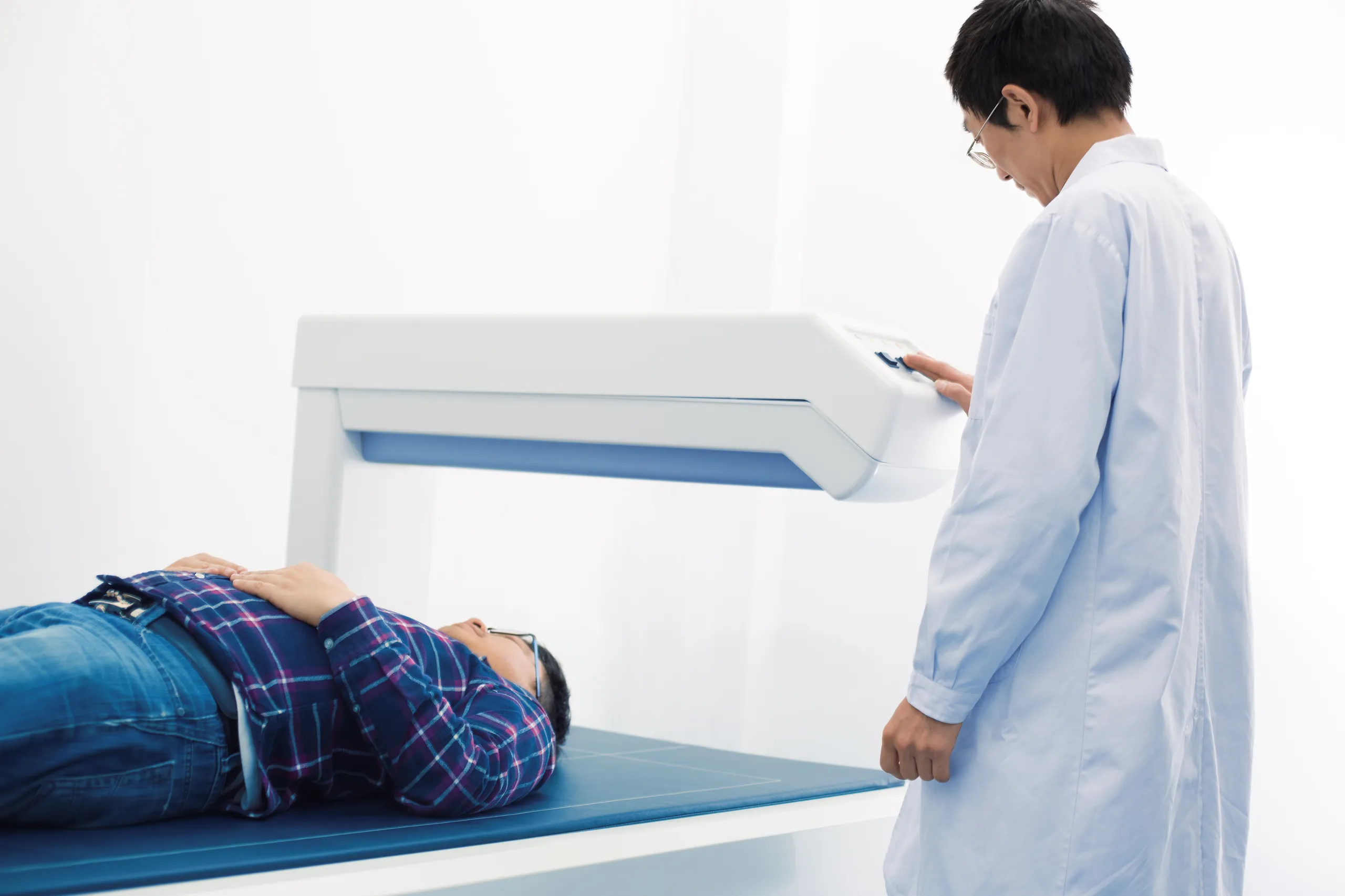
During your DEXA scan, you’ll lie comfortably on a scanning table while the machine passes over the areas being examined, typically the hip and lower spine. You’ll need to remain still for accurate measurements, but the examination is quick, painless and non-invasive, and you won’t be enclosed within a scanner. Our team will explain the process and make sure you know what to expect before your scan begins.
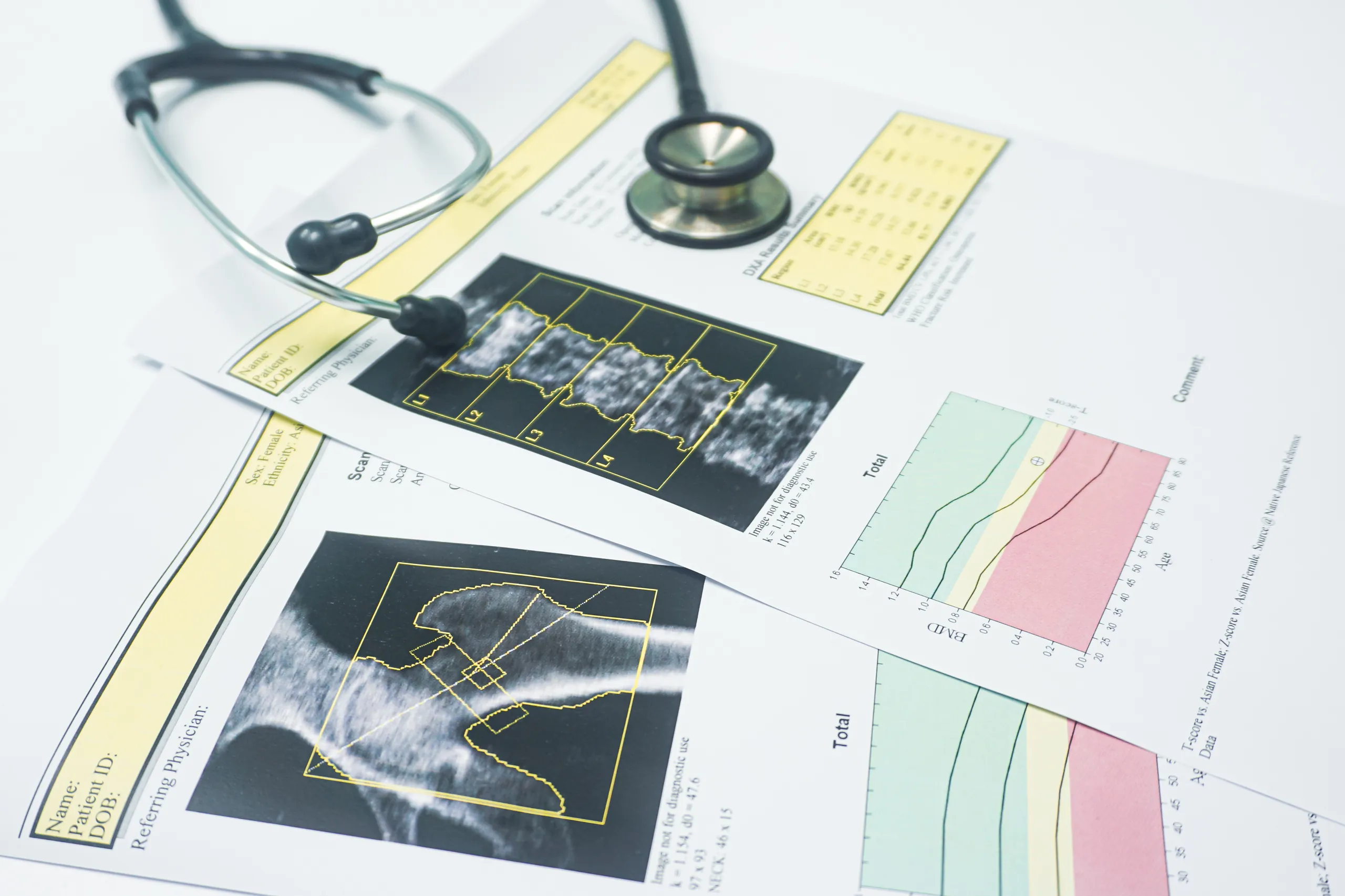
Your DEXA results provide an objective measurement of your bone mineral density and are commonly expressed as T-scores and Z-scores. These compare your bone density with established reference values and help determine whether it is within the expected range or indicates osteopenia or osteoporosis. Your results can then be considered alongside your age, medical history and other risk factors to build a clearer picture of your overall bone and fracture health.
If your DEXA scan identifies osteopenia or osteoporosis, the next step will depend on the degree of bone loss and your overall fracture risk. Further investigations, lifestyle measures, monitoring or treatment may be recommended. At VisitHealth, you can also access GPs, in-house blood testing and experienced orthopaedic surgeons where further assessment is required, helping coordinate the next stages of your care.
Friends and family recommend us
What can a DEXA scan diagnose?
A DEXA scan can identify reduced bone mineral density and is commonly used to diagnose osteopenia and osteoporosis. The results can also contribute to an assessment of your future fracture risk, particularly when considered alongside factors such as your age, medical history and previous fractures. Repeat scans may also be used to monitor changes in bone density and assess how your bones respond to treatment over time.
Book appointment
Osteopenia
Osteoporosis
Reduced bone strength
Future fracture risk
DEXA scan frequently asked questions
A DEXA scan may be recommended if you are at increased risk of osteoporosis, including due to age, menopause, family history, a previous fracture, certain medical conditions or medications that can affect bone strength. Because bone loss can develop without symptoms, you may benefit from testing even if you currently feel well.
Yes. DEXA is the standard test used to measure bone mineral density and can identify whether your results are consistent with normal bone density, osteopenia or osteoporosis.
Your results can help determine whether further assessment, monitoring or treatment is appropriate. At VisitHealth, you can access GPs, in-house blood testing and experienced orthopaedic surgeons where additional investigation or specialist care is required.
No. A DEXA scan is quick, painless and non-invasive. You'll simply lie on the scanning table while measurements of your bone density are taken.
No. A DEXA scanner has an open design and does not involve entering the enclosed tunnel associated with an MRI scanner, making the examination straightforward and comfortable.
Yes, but the radiation exposure is very low. DEXA uses a small dose of X-rays to accurately measure your bone mineral density.
Very little preparation is usually required. You may need to avoid clothing with metal fastenings and remove jewellery or other metallic items. We'll provide any specific instructions before your appointment.
Your bone density results provide important information about bone strength and can contribute to an assessment of your future fracture risk. Your clinician may also consider factors such as your age, medical history and previous fractures.
Yes. Repeat DEXA scans may be recommended if you have osteopenia or osteoporosis or are receiving treatment that affects bone health. Comparing scans over time can help monitor changes in your bone density.
We work with Bupa, Vitality, WPA, Healix and other UK and international private medical insurers. Coverage and authorisation requirements vary by policy, so please check with your insurer before booking.
Still have questions about DEXA scans at VisitHealth?
Contact usBook your private DEXA scan
Get a clear assessment of your bone health with a private DEXA scan to identify osteoporosis, osteopenia and reduced bone density.

Private DEXA scan prices
Insurance: we’ve got you covered
We partnered with Bupa, Vitality, WPA and Healix. We also work with other major international insurance companies.
How to let us know you are insured:
Walk-In & Pre-Book Options
Same-Day GP Appointments Kensington Olympia
Get directionsOur clinic
VisitHealth launched in 2017, specialising in nurse-led home care. We have since grown into a new breed of health clinic, delivering a wide range of on-demand healthcare services, seven days a week, 365 days a year.